

Maximo Integrations and Architecture in 2026: MIF, REST, OSLC, and the JSON-First Stack
A field-tested guide to the Maximo Integration Framework in MAS 9.x, comparing MIF, the legacy REST API, the new JSON REST API, and OSLC, with patterns for real-time, batch, and event-driven integration in 2026.
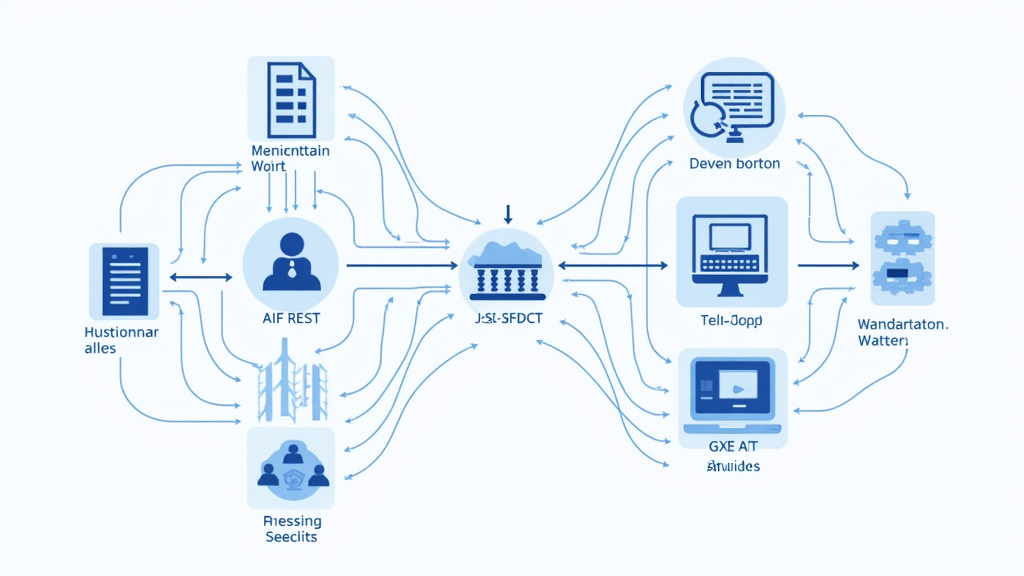
Maximo Integrations and Architecture in 2026: MIF, REST, OSLC, and the JSON-First StackIntegration is where most Maximo projects succeed or fail. The platform has matured for decades, the configuration models are well understood, and the user experience keeps improving with every release. None of that matters if Maximo cannot reliably exchange data with the ERP system, the SCADA historian, the procurement platform, the GIS layer, or the HR feed that drives labor assignment. The most common question we hear from architects in 2026 is not "should we use MIF?" but "given MIF, OSLC, the new JSON REST API, the legacy /maxrest/rest API, the Kafka event bus, and the MAS Admin APIs, which one do we use for this specific integration, and how do we sequence them so we do not end up with five overlapping patterns that nobody can maintain?"
This article is a practical, opinionated guide to that question. It maps the current Maximo integration surface, gives clear recommendations for the most common patterns, and shows working code for the integrations most teams need to build. The recommendations reflect what we see working in production across utilities, manufacturing, transit, and oil and gas in 2026, not just what the documentation suggests.
The Maximo Integration Surface in MAS 9.x
Maximo Application Suite 9.x exposes a layered integration surface that has converged around JSON and REST over the last three releases. The Maximo Integration Framework remains the umbrella term, but the protocols that sit under that umbrella have changed substantially since the SOAP-only days of Maximo 7.x.
The primary integration options in MAS 9.x are:
- The Maximo Integration Framework (MIF) with publish channels, enterprise services, and object structures. MIF still supports SOAP and XML for backward compatibility, but JSON and REST are now first-class.
- The new Maximo Manage REST APIs (also called the REST/JSON APIs or the OSLC-flavored REST APIs). These are the same APIs the Maximo Mobile platform and the new desktop UI framework use. They expose every Maximo business object through consistent, OpenAPI-style endpoints.
- OSLC (Open Services for Lifecycle Collaboration), which provides linked-data semantics on top of the REST surface. OSLC is most useful when integrating Maximo with other IBM tools, with vendors that have adopted OSLC, or when you want to model cross-system resource relationships.
- The legacy /maxrest/rest API, which was developed in the 7.1/7.5 era. It still exists for backward compatibility, but new development should not use it.
- The MAS Admin APIs (under /api/applications and related paths) for suite-level administration: workspace management, user provisioning, application enablement.
- Event-driven integration through Kafka topics exposed by the Maximo platform, plus outbound webhooks for select event types.
- Database-level integration through the Maximo database, which is still common for analytics warehouses and reporting databases. Treat this as a last resort.
The key architectural shift in MAS 9 is that REST and OSLC are no longer bolt-on additions to a SOAP-centric MIF. They are the native integration surface. Every Maximo object, from work orders to assets to purchase orders to service requests, is reachable through consistent REST endpoints, and the new JSON API shares a code base with the OSLC REST APIs that Maximo Anywhere and Maximo Mobile use. If you are starting a greenfield project in 2026, the JSON REST API is the default choice, and MIF is reserved for the patterns where it is genuinely better: complex inbound transformations, publish channels with conditional logic, and legacy integrations you cannot yet rewrite.
Choosing Between MIF, JSON REST, and OSLC
The choice between these three is the question we get asked most. Here is the decision rule we use in 2026.
Use the JSON REST API when you are:
- Building a new integration, particularly with a modern external system.
- Reading or writing Maximo business objects in real time.
- Building a mobile or web front end that talks to Maximo directly.
- Calling Maximo from a serverless function, a containerized microservice, or any REST-native runtime.
- Doing bulk reads or bulk writes that benefit from the batch endpoint.
Use MIF when you are:
- Maintaining a legacy integration that already uses MIF enterprise services or publish channels, and the cost of rewriting is not justified.
- Performing complex inbound transformations that benefit from MIF's processing classes, Java hooks, and conditional channel logic.
- Publishing changes to multiple downstream systems through a single publish channel with routing rules.
- Integrating with SAP, Oracle, or other ERP systems through the Maximo ERP Integration add-on, which is built on MIF.
Use OSLC specifically when you are:
- Modeling cross-system resource relationships (for example, a work order linked to a requirement linked to a test case across multiple OSLC-aware systems).
- Integrating with other IBM tools that expose OSLC endpoints.
- You need delegated UI (the OSLC selection dialog) so that users can pick a value from Maximo inside another application's UI.
For most teams in 2026, the answer is to build with the JSON REST API by default, keep MIF for the integration patterns where it is genuinely better, and reserve OSLC for the specific scenarios where its semantics add value. Mixing all three in one project is fine. Using all three to do the same thing is a smell that the architecture needs cleanup.
A note on the legacy /maxrest/rest API: it is still present in MAS, and many tutorials online still reference it. Treat those tutorials as historical. Most of what /maxrest/rest can do, the new JSON API can do better, with richer query support, batch operations, and proper authentication via API keys. If you find yourself writing a new endpoint against /maxrest/rest in 2026, stop and use the JSON API instead.
The JSON REST API in Practice
The Maximo JSON REST API follows a consistent, predictable pattern. Every resource is reachable through a URL that mirrors the Maximo object hierarchy. The most commonly used endpoint is the work order resource at /maximo/oslc/os/mxwo, but the same shape applies to assets at /maximo/oslc/os/mxasset, purchase orders at /maximo/oslc/os/mxpo, and so on.
A typical query, for example pulling all work orders awaiting approval ordered by report date, looks like:
GET /maximo/oslc/os/mxwo?_where=status%3D%22WAPPR%22&_orderby=reportdate%20desc&lean=1
The _where parameter accepts OSLC-style filter expressions. The lean=1 flag tells Maximo to return only the fields needed for display, which dramatically reduces payload size and improves performance on large result sets. For list views and dashboards, always use lean mode. For record-detail views where you need related objects (such as work order tasks, attachments, or labor transactions), omit lean mode or use the related-object query syntax.
Creating a record uses a POST with a JSON payload that maps directly to the Maximo object structure:
POST /maximo/oslc/os/mxwo
Content-Type: application/json
Authorization: Bearer
{ "description": "Replace failed pump motor on Unit 3", "assetnum": "PUMP-3001", "siteid": "BEDFORD", "worktype": "CM", "priority": 1, "reportedby": "MAXADMIN", "reportdate": "2026-07-28T08:30:00-05:00" } ```
Authentication uses API keys, which can be created through the MAS Admin APIs or through the Security Groups application. API keys are the recommended authentication method in MAS 9 because they support rotation, scoping, and audit logging in ways that basic auth cannot. SOAP and REST endpoints that previously used basic auth should be migrated to API keys as part of any MAS upgrade.
The most useful feature of the JSON REST API for high-volume integrations is batch operations. Instead of making individual API calls for each record, you can submit a batch in a single request:
POST /maximo/oslc/os/mxwo?lean=1
Content-Type: application/json
[ { "description": "WO batch 1", "assetnum": "P-1001", "siteid": "PLANT1", "worktype": "PM" }, { "description": "WO batch 2", "assetnum": "P-1002", "siteid": "PLANT1", "worktype": "PM" }, { "description": "WO batch 3", "assetnum": "P-1003", "siteid": "PLANT1", "worktype": "PM" } ] ```
Batch operations can include hundreds of records in a single request. They use the same transaction model as the UI, which means all records succeed or all records fail. For large backfills, build a wrapper that handles batching, retries, and per-record error logging so that a single bad record does not blow up a 10,000-record load.
MIF Patterns That Still Make Sense in 2026
MIF remains the right tool for several patterns even with the JSON API available. Publish channels with conditional logic, complex inbound transformations with Java exit classes, and the ERP Integration add-on are all MIF-native patterns that the JSON API does not replace.
The most common MIF pattern in 2026 is the inbound integration with a flat-file or XML payload from an external system. The flow looks like this:
- The external system drops a file in a watched directory, or calls a webhook that lands in an HTTP inbound channel.
- The MIF inbound channel parses the file, maps it to an object structure, and applies any conditional processing.
- An enterprise service validates the data and invokes a Maximo business object method to create or update records.
- The external system gets an acknowledgement with a success or failure status.
The conditional processing in step 2 is where MIF earns its keep. For example, you can configure the channel to:
- Reject records that fail validation before they hit the database.
- Route records to different object structures based on field values (for example, separate processing for corrective maintenance versus preventive maintenance work orders).
- Trigger downstream processing, such as generating a follow-on work order when a parent work order closes.
A typical MIF publish channel, defined in XML and imported through the Integration module, might look like this for outbound asset updates:
asset.sync.outbound
For integrations where MIF still makes sense, the rule of thumb is to keep the MIF logic focused on the things that genuinely need conditional routing or complex transformation, and to expose the resulting data through the JSON REST API for downstream consumers. The era of building the entire integration surface in MIF is over.
Event-Driven Integration and Kafka
MAS 9 introduces deeper support for event-driven integration through Apache Kafka. The Maximo platform publishes events for the most common business-object changes (work order created, work order closed, asset updated, inspection completed) to internal Kafka topics. External systems can subscribe to these topics for real-time processing without polling the database or calling the REST API on a schedule.
The practical pattern in 2026 looks like this:
- A work order closes in Maximo.
- Maximo publishes an event to the wo.status.change topic with the work order ID, new status, asset reference, and close date.
- A downstream service (for example, a material-cost rollup in the data warehouse, or a reliability dashboard) consumes the event and processes it asynchronously.
The benefits over polling-based integration are significant. Latency drops from the polling interval (often minutes) to seconds. Database load drops because there are no repeated query calls. And the architecture becomes more resilient because Kafka retains events for replay if a downstream consumer is down.
The two operational caveats in 2026 are observability and schema management. Kafka topics need a schema registry (Avro or JSON Schema) and a topic-monitoring dashboard. Teams that skip the schema registry and just dump JSON into Kafka end up with downstream consumers breaking silently when fields change. We recommend deploying Confluent Schema Registry or Apicurio alongside the MAS Kafka cluster and treating the schemas as production code with version control and review.
For organizations that do not yet have a Kafka platform, MAS 9 also supports outbound webhooks for select event types. Webhooks are simpler to set up but do not provide the replay capability of Kafka. They are a good starting point for teams building their first event-driven integration.
Integration Anti-Patterns
The integration anti-patterns we see most often in 2026 projects are:
Direct database writes. Teams bypass MIF and the REST API and write directly to the Maximo database. This breaks Maximo's business logic, skips validations, and creates data that Maximo cannot read back correctly. Always go through the API surface, even when it feels slower.
Mixing protocols for the same business object. We see teams that create work orders through MIF, update them through the legacy REST API, and read them through the new JSON API. This works until one of the protocols changes behavior in an upgrade, and then it breaks mysteriously. Pick one protocol per business object and document the choice.
Synchronous chains across many systems. A work order creation that synchronously calls five downstream systems to validate, enrich, and route the data is fragile. One slow downstream system makes the whole chain slow. Use asynchronous patterns (Kafka topics, queues, or scheduled reconciliation) wherever possible.
Undocumented integrations. The single biggest source of upgrade pain in Maximo is integrations that nobody documented. Before MAS upgrades, teams spend weeks discovering what integrations exist. Maintain an integration catalog with the protocol, the endpoint, the data flow direction, the owner, and the upgrade impact for every integration. The catalog pays for itself the first time you upgrade.
Practical Implications
For architects and integration leads planning a Maximo project in 2026, the practical implications are clear. Build new integrations on the JSON REST API by default, with API key authentication and lean mode for list operations. Keep MIF for the patterns where conditional routing and complex transformations justify the complexity. Reserve OSLC for cross-system linked-data scenarios and IBM-tool integrations. Treat Kafka as the default for event-driven patterns, with webhooks as a fallback for teams not yet ready for Kafka. And maintain an integration catalog from day one.
For teams maintaining existing Maximo integrations, the priority is to migrate away from the legacy /maxrest/rest API where it is still in use, switch from basic auth to API keys, and consolidate around the JSON REST API. The MAS 9 upgrade cycle is the right window to do this work, because the platform now supports the patterns natively and basic auth is increasingly deprecated across enterprise security policies.
For organizations that have not yet moved to MAS 9, the integration surface is one of the strongest reasons to plan the upgrade. The JSON-first integration model in MAS 9 is materially faster to build against, materially easier to maintain, and materially better aligned with modern enterprise architectures than the SOAP-centric MIF of Maximo 7.x. The upgrade pays for itself in integration maintenance costs within the first two years for most organizations.
Bottom Line
The Maximo integration surface in 2026 is JSON-first, REST-native, and supplemented by Kafka for event-driven patterns. Build new integrations on the JSON REST API. Keep MIF for the patterns where it earns its keep. Reserve OSLC for the specific scenarios where linked-data semantics add value. Treat the legacy /maxrest/rest API as historical. Maintain an integration catalog. And use Kafka or webhooks for event-driven patterns rather than polling. The teams that succeed with Maximo integrations in 2026 are the teams that pick the right protocol for each pattern, document the choices, and keep the integration surface manageable rather than letting it sprawl across every option the platform exposes.
Author
Kevin Arhagba
Maximo Insider contributor
Was this helpful?
The Maximo Brief
Get weekly Maximo analysis and field notes.
Powered by Ghost. Join The Maximo Brief — one weekly read for Maximo professionals.
Cite this article
Arhagba, K. (2026). Maximo Integrations and Architecture in 2026: MIF, REST, OSLC, and the JSON-First Stack. MaximoInsider. https://maximoinsider.com/articles/maximo-integrations-architecture-mif-rest-oslc-2026