

The Middleware Under Maximo: What the MQ Vulnerability Cluster Reveals About Integration Path Ownership
A cluster of IBM MQ defects published two weeks before the Maximo 7.6.1.x support deadline has no vendor workaround and sits directly on common Maximo file-based integration paths. This article examines the disclosure, the ownership gap it exposes, and a concrete remediation sequence for…
The Middleware Under Maximo: What the MQ Vulnerability Cluster Reveals About Integration Path OwnershipCategory: Integrations & Architecture | Maximo Insider | September 21, 2026
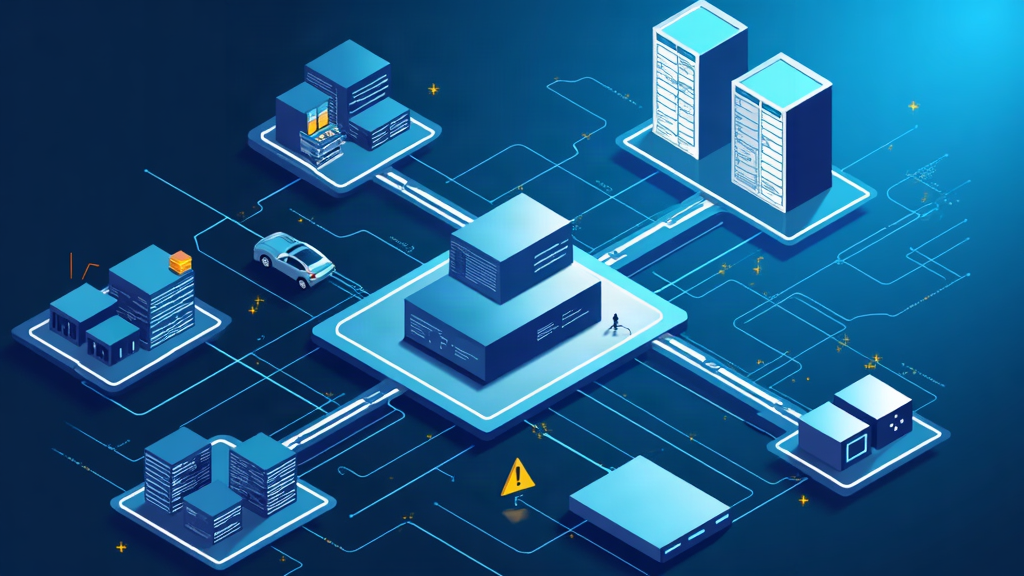
Maximo integration architecture is usually documented from the application outward. There is a diagram with Maximo Manage in the center, external systems arrayed around it, and arrows showing the flow of work orders, meter readings, asset records, and purchase requisitions. The diagram is accurate at the level it operates, and it is missing the layer that actually decides whether integration works: everything between the Maximo application server and the system of record on the other end. Message brokers, managed file transfer components, SFTP gateways, ETL jobs, transformation scripts, and the directories and permissions that tie them together. Nobody draws that layer because nobody owns it, and the ownership gap does not announce itself until something breaks or a vulnerability lands on it.
A vulnerability landed on it in mid-September. IBM published a cluster of defects against the MQ family covering XML external entity processing in reply-message handling and in a template parser, an installation verification component that permitted arbitrary code execution through insufficient validation of JNDI names, and a deserialization exposure allowing remote authenticated code execution. Published severities fall in the 7.1 to 7.5 range, all requiring authentication, and the vendor mitigation field for the primary defect reads, in effect, that there is none. The only remedy is a cumulative update, and the affected ranges span several LTS and continuous-delivery streams.
For Maximo integration teams, that disclosure is not a middleware footnote. In a great many Maximo estates, managed file transfer is the transport that carries interface files between networks, and MQ is the broker underneath asynchronous integration patterns. The defect therefore sits on the path, not beside it. This article looks at what the cluster actually means for Maximo integration architecture, why the ownership gap it exposes is wider than one CVE, and what an integration team should do about it this quarter.
Reading the Disclosure Without Overreacting
The first thing to establish is proportionality. Every defect in this cluster requires authentication, which means an attacker needs valid credentials to an MQ component before any of the exploitation paths become available. That is a meaningful barrier in a well-controlled environment, and it is the reason this is an urgent architectural conversation rather than a stop-everything incident. Integration teams that treat it as a five-alarm breach will burn the credibility they need for the remediation that actually matters.
The second thing to establish is that the authentication requirement does not make the cluster dismissible in Maximo environments specifically, for two reasons. The first is that Maximo integration paths tend to hold service credentials in more places than any other part of the estate: in scheduled job configurations, in external system definitions, in properties files on application servers, in the middleware itself, and in the operational documentation that gets emailed around during an upgrade. Each location is a copy of an authenticated identity with broker access, and each one is a path to satisfying the precondition these defects require.
The second is that the vendor's mitigation field is empty. Security teams are accustomed to disclosures that arrive with a configuration change, a property flag, or a documented workaround that buys time until the patch window opens. This cluster does not offer that. When the only remediation is a version upgrade, the upgrade stops being a scheduled maintenance item and becomes the control itself. That changes the conversation with the change board from "when can we fit this in" to "what is our exposure while this sits open", and the answer depends entirely on how well the path is segmented and monitored.
The third thing to establish is scope. The affected ranges are wide and span products that integration teams may have inherited rather than selected. Managed file transfer is often deployed as a companion component years after the broker, by a different team, for a specific project. That deployment pattern is what makes the cluster a useful test of integration documentation: an estate that can answer, within an hour, which MQ components are on Maximo integration paths and at which patch level, has the ownership discipline this article is about. An estate that needs a week of archaeology to answer it has found the gap.
Why the Layer Beneath Maximo Is Chronically Underowned
The underownership of Maximo middleware is not a failure of any individual team. It is a structural outcome of how EAM estates grow, and understanding the mechanism is the only way to fix it durably.
Maximo projects are scoped to Maximo. The implementation partner is contracted to deliver an asset management system, the budget is an EAM budget, and the statement of work names Maximo deliverables. When the integration requirement appears, it is met with the smallest credible piece of middleware that satisfies the interface, which is why estates accumulate a mix of file drops, small brokers, and one-off gateways that were each justified individually and never designed together. Each component has an owner in a nominal sense, usually the team that installed it, and no owner in an operational sense, because operational ownership implies monitoring, patching, lifecycle planning, and a named person accountable for drift.
Then the integration layer becomes invisible through success. When it works, nobody looks at it, because the thing everyone looks at is Maximo. When it fails, the first responder is a Maximo administrator, because the symptom appears in Maximo. That administrator diagnoses outward, finds a stuck file or a queue backlog, and works around it, which resolves the incident and guarantees the middleware receives no engineering attention. Over years, the pattern produces a transport layer that is load bearing, unaudited, and staffed by nobody.
Security disclosures are the event that converts this invisible layer into a visible risk, and they do it in a way that exposes the ownership gap all at once. The Maximo team checks Maximo CVEs. The middleware team checks middleware CVEs, if a middleware team exists. The infrastructure team owns the network rules between them. Nobody owns the composite question of which components carry Maximo integration traffic and whether those components are current. That question is the actual finding here, and it is more durable than any single CVE number.
A Remediation Sequence for the Current Cluster
The remediation has to be sequenced, because the upgrade cannot happen instantly and the exposure does not pause while it is scheduled.
Start with identification and scope confirmation. Determine which MQ and managed file transfer components are deployed, which of them carry Maximo interface traffic, and which fall inside the affected version ranges. Record the patch level, not the version headline, because the cumulative update numbering in this cluster is what determines exposure. Where a component is on a Maximo path and in an affected range, it moves to the priority list regardless of which team installed it.
Second, apply the controls that exist while the upgrade is pending. These defects require authentication, so credential hygiene is the first compensating control: rotate service account credentials on the integration path, remove any shared administrative identity from middleware reachable from plant or user networks, and confirm that integration service accounts hold the narrowest queue and directory permissions that still permit operation. Network control is the second: constrain which hosts can reach the broker and the file transfer component, replacing broad permits with explicit rules, and confirm that management consoles are not reachable from user networks. Both controls are available today and neither requires an application change.
Third, raise detection. Because there is no workaround, the only way to know whether an attempt occurred is to be watching. Enable logging on the integration path, alert on connections from unexpected sources, unexpected queue depth changes, unusual file naming or volume, and any outbound connection originating from the middleware zone. Assign a review cadence with a named person. Detection without a review cadence is a log file nobody reads.
Fourth, execute the upgrade through the cumulative update route appropriate to the deployed stream, treating it as a security change rather than a feature change. That distinction matters for the change board and for testing scope: the test plan should validate that interfaces still behave identically, not just that the component restarts. Integration regression testing after a middleware upgrade is where most estates get caught, because the tests that exist cover the happy path and the failures appear in edge conditions such as large files, unusual characters, or retry behavior.
Fifth, document the path. Produce a single diagram and inventory of every component between Maximo and each external system, with owner, version, patch level, vendor feed, and review date. This artifact is what turns the next disclosure into a one-hour exercise instead of a two-week one.
One sequencing note deserves emphasis because it is where remediation projects most often stall. Steps two and three are available now and can be executed by the integration team without a change board decision, while step four depends on approval, a window, and a regression test cycle that may be weeks away. Teams that treat the five steps as a single change package end up waiting for the slowest approval before doing anything, which leaves the path exposed for the entire duration of the wait. Treat the controls and the detection as one workstream that starts immediately, and the upgrade as a second workstream that proceeds on its own timeline. The two do not need to be coupled, and coupling them is the most common way that an urgent middleware disclosure turns into a deferred one.
There is also a communication step that is easy to skip and costly to omit. Because these defects require authentication, the interim posture depends on credential hygiene across the integration path, and credential hygiene only survives if the people operating the path understand why it changed. Rotating a service account and tightening a queue permission without telling the operations team what to expect produces a support call the next time a scheduled interface runs under an identity that now has narrower rights. A short note describing what changed, why it changed in the context of an open vendor disclosure, and which interface to watch is the difference between a control that holds and a control that gets reverted by an operator solving an urgent problem at two in the morning.
Finally, the scope confirmation in step one should extend one level beyond the components themselves. For each affected component, establish which Maximo external systems and scheduled jobs depend on it, and in which direction the data flows. A managed file transfer component with no inbound path carries a different exposure profile from one that accepts files from partners or plant networks, and the difference should drive priority when several components are in scope and only one window is available in the coming weeks.
Hardening the Integration Path Beyond This Patch
The cluster is a good reason to do work that should have been done anyway, and integration teams should use the attention it generates to close the structural weaknesses underneath it.
The first structural change is to reduce the number of authenticated surfaces on the path. Every file drop directory and every broker queue is an identity boundary. Consolidating transports so that fewer components carry Maximo traffic reduces the patch surface permanently and makes monitoring tractable. Estates running three different file transfer mechanisms for historical reasons can usually retire one during the next interface change without a dedicated project.
The second is to move the integration path toward a pattern that carries its own observability. File-based integration is opaque by nature: the only signal that something happened is a file appearing or not appearing. Adding correlation identifiers that move with the payload, and recording receipt, transformation, and delivery events in a place the operations team already watches, converts the path from a black box into a monitored system. Teams that have made this change report that incidents which used to consume half a day of triage are resolved in minutes because the failure point is visible.
The third is lifecycle planning that treats middleware as a first-class asset. Every component on the Maximo path should have a named owner, a target version, and a review interval in the same register that tracks the Maximo application itself. The register is the mechanism that prevents the next cluster from being discovered by a scanner rather than by the team responsible for the path.
The fourth is to align the Maximo integration test suite with middleware change events. Any change to a component on the path should trigger a defined subset of interface tests, sized so that it can be run inside a normal change window. Estates that do this discover middleware regressions before users do, which protects the credibility that integration teams need when they ask for time to do the architectural work.
Practical Implications
For an integration team inside a Maximo estate, the practical sequence this month is short. Confirm which MQ and managed file transfer components carry Maximo traffic and which are in affected ranges. Rotate credentials and tighten network rules on those components today, because those controls are available immediately and directly address the authentication precondition these defects require. Start the cumulative update through the change process as a security change with a defined interface regression test plan. Then build the path inventory and give every component on it a named owner and a review date.
For estates that are also approaching the Maximo 7.6.1.x support deadline at the end of the month, one caution deserves emphasis. Do not bundle the middleware upgrade into the migration cutover. A middleware security update executed during a migration window, on top of a new Maximo version, with a change freeze approaching, is a failure mode that produces long outages and ambiguous blame. Where both changes are needed, sequence them: harden and patch the transport first against the current Maximo version, confirm interface stability on the known baseline, and let the migration proceed against a middleware layer you have already proven.
For architecture groups, the wider implication is that integration ownership should be a named role rather than a distributed assumption. The most common finding in EAM estates is not that the middleware was unpatched, but that nobody could say who was responsible for knowing whether it was. A one-page charter assigning that responsibility, with a quarterly report to the platform owner, costs almost nothing and removes the class of surprise that this cluster represents.
Bottom Line
The MQ vulnerability cluster matters less for its specific severities than for what it exposes about the layer beneath Maximo. Authentication is required, no vendor workaround is offered, and the remedy is a cumulative update, which means the control is the upgrade and the interim defense is architecture. In Maximo estates where managed file transfer and brokering carry interface traffic, these defects sit directly on the path that keeps asset data moving between systems.
The response that holds is to scope the components accurately, close the authentication and network preconditions immediately, raise detection while the upgrade is scheduled, and then fix the structural problem by giving the integration path a documented owner, a component inventory, and a lifecycle register. Estates that do the architectural work will treat the next middleware disclosure as an hour of scoping. Estates that only apply the patch will rediscover the same ownership gap when the next cluster arrives, which on current form is a matter of weeks rather than years.
Author
Kevin Arhagba
Maximo Insider contributor
Was this helpful?
The Maximo Brief
Get weekly Maximo analysis and field notes.
Powered by Ghost. Join The Maximo Brief — one weekly read for Maximo professionals.
Cite this article
Arhagba, K. (2026). The Middleware Under Maximo: What the MQ Vulnerability Cluster Reveals About Integration Path Ownership. MaximoInsider. https://maximoinsider.com/articles/the-middleware-under-maximo-what-the-mq-vulnerability-cluster-reveals-about-integration-path-ownership